On a production line, a “feeling” that a cap is tight enough or a part is strong enough is not good enough for quality control — every operator applies a different force, and none of it is recorded. Measuring force (push/pull) and torque (rotation) as repeatable numbers is the foundation of quality assurance, incoming inspection, and proving a product meets its specification.
Force vs torque: what’s the difference
The two measure different directions of effort and use different instruments:
- Force — a straight-line push or pull: pressing a button, pulling a wire off, peeling a seal, compressing a spring. Measured with a force gauge in N or kgf.
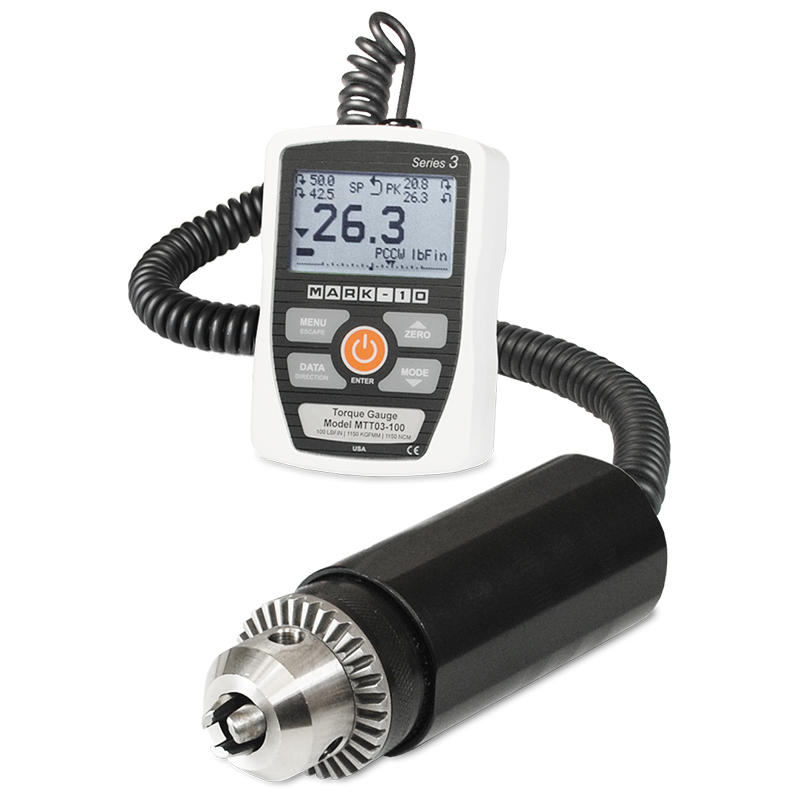
- Torque — a rotational effort around an axis: turning a cap, driving a screw, twisting a knob. Measured with a torque gauge in N·m or N·cm.
Featured case: bottle-cap torque testing
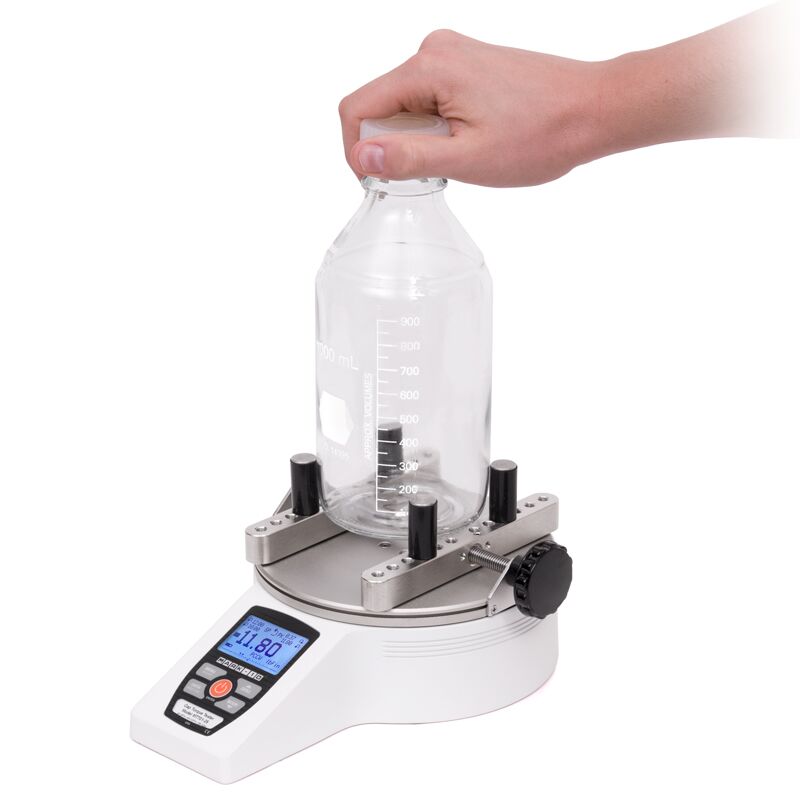
Thailand’s food, beverage, cosmetics, and pharmaceutical makers must keep cap torque “just right.” A cap that is too tight stops consumers — especially older ones — from opening it and hurts the brand; too loose and the product leaks, gets contaminated, expires early, or loses carbonation. Cap torque testing is therefore a high-value QC checkpoint for any filling plant.
- Application torque — the torque used to close the cap, kept within a target window.
- Removal torque — the torque to open the cap, reflecting the real user experience.
- Bridge / strip torque — checking tamper-band breakage and thread stripping.
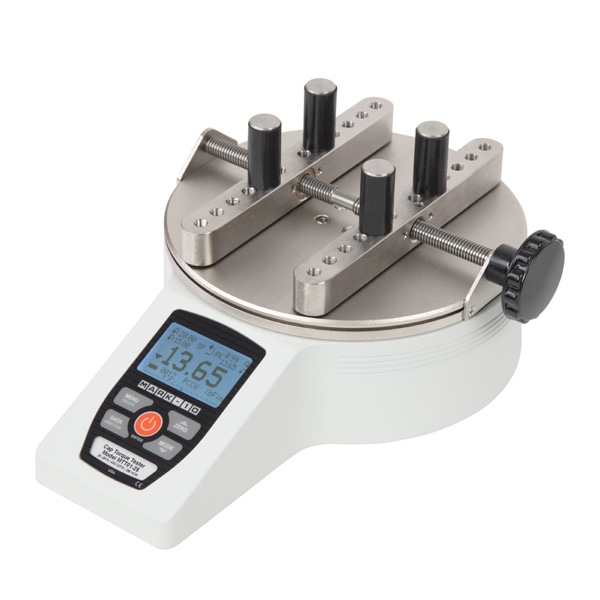
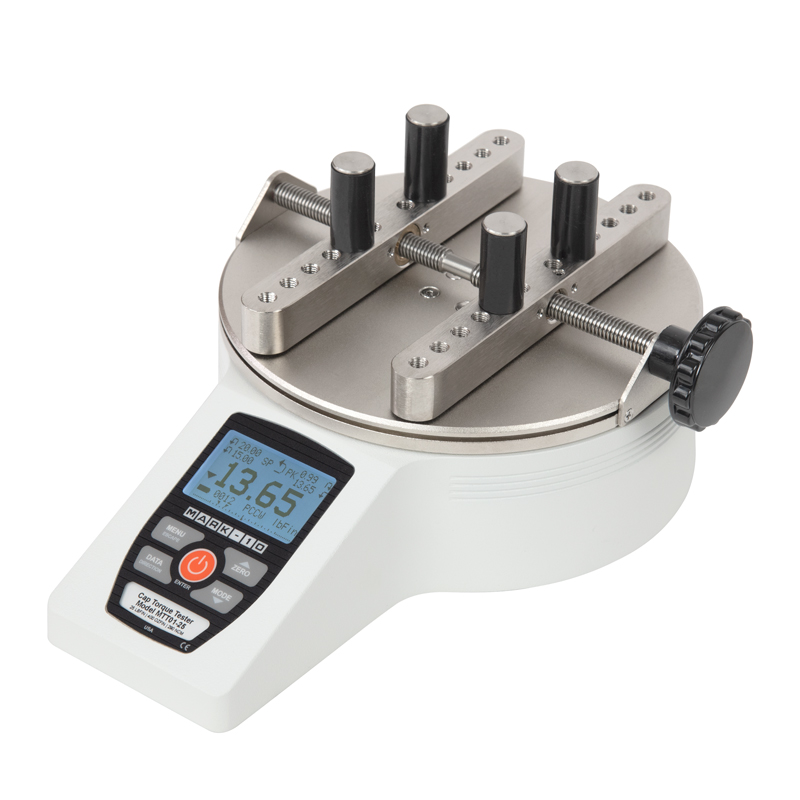
Mark-10 Series TT01 cap torque testers
The Mark-10 Series TT01 is purpose-built for cap opening/closing torque, with ±0.3% full-scale accuracy and sampling up to 7,000 Hz for precise peak capture. First/second-peak detection isolates slip and breakaway torques, adjustable posts accommodate containers 0.5–7.5 in in diameter, and it offers pass/fail limits, five measurement units, 1,000-reading memory with statistics, and USB/RS-232 export via MESUR Lite software.
- MTT01-12 — up to 12 lbFin (135 Ncm).
- MTT01-25 — up to 25 lbFin (290 Ncm).
- MTT01-50 — up to 50 lbFin (570 Ncm).
- MTT01-100 — up to 100 lbFin (1,150 Ncm).
Other QC applications that sell well in Thailand
- Peel-strength testing of foil pouches, foil lids, and flexible packaging.
- Spring force testing (compression/extension) in automotive and appliance parts.
- Button, switch, and touchscreen actuation-force testing in electronics.
- Wire-crimp pull-off and connector retention testing.
- Tensile/tear testing of materials, textiles, plastics, and rubber.
- Force testing of medical devices such as syringes and insulin pens.
How to choose a tester
- Capacity that covers your range with overload margin.
- Accuracy (e.g. ±0.1–0.5% FS) and a sampling rate fast enough to catch peaks.
- Data output (USB/RS-232) and software for logging and reporting.
- A manual or motorized test stand for repeatable, operator-independent results.
- Grips and fixtures suited to your specimens.
Mark-10 — a complete force & torque solution
PMC Technology distributes Mark-10 of the USA, a specialist in force and torque measurement built for QC — from handheld gauges to automated test systems:
- Series 7 digital force gauges — ±0.1% accuracy, sampling up to 14,000 Hz.
- TT03 torque gauges/testers and the MTT01 cap torque tester.
- Motorized stands (ESM/F-series) and manual stands (TSF/ES) for repeatable results.
- A wide range of grips, fixtures, and sensors to build application-specific setups.
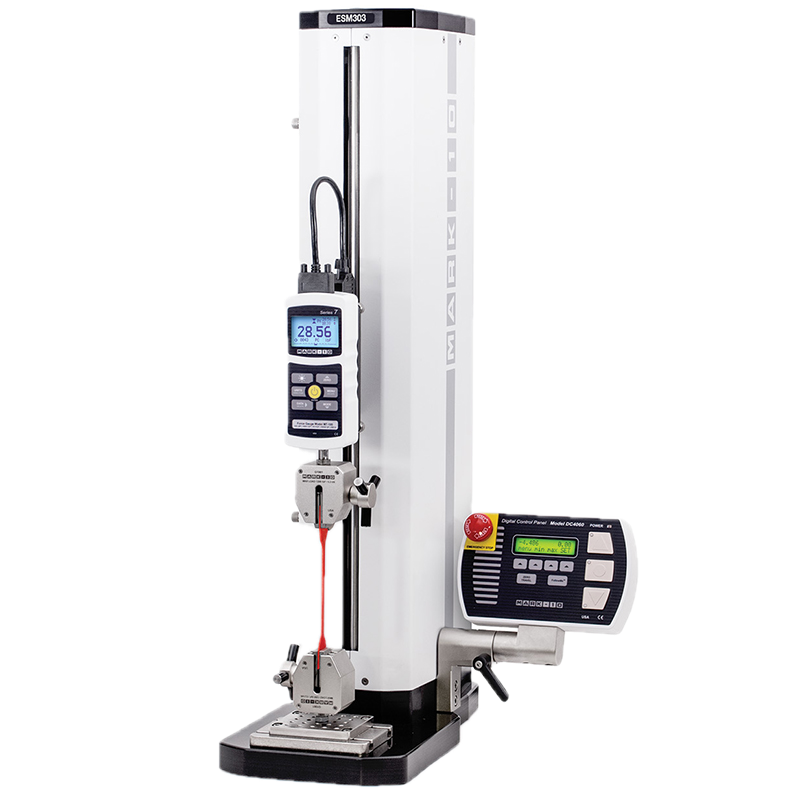
Whether your challenge is cap torque, seal peel, or material tensile strength, the PMC team can help you select the right gauge, test stand, and fixtures for your application and standards.