EV chargers are going up fast, in malls and in plants alike — but installed and working are two different things. Fluke cites Harvard Business School research finding that roughly one in five DC fast chargers in the US is not operational when a driver turns up. Most of the time the whole unit has not failed; something small was never checked on commissioning day.
AC and DC chargers are not tested the same way
The difference that matters most is where the conversion happens. An AC charger passes alternating current to the car and lets the on-board charger convert it, so the unit behaves like a smart socket that negotiates with the vehicle and then releases power. A DC fast charger converts to direct current inside the cabinet and pushes it straight into the battery — which makes testing considerably heavier work.
| Aspect | AC charger | DC fast charger |
|---|---|---|
| Converter | On board the vehicle | Inside the cabinet |
| IEC 61851 mode | Mode 3 | Mode 4 |
| Connector used in Thailand | Type 2 | CCS2 |
| Communication | PWM over CP / PP | ISO 15118, DIN SPEC 70121 |
| Typical power | 7–22 kW | 50–350 kW |
The three things you have to test
- Electrical safety — protective earth actually connected and continuous, insulation on cables and enclosure still sound, residual-current protection tripping within its specified time. This is the one that hurts people when it is wrong.
- Communication — the charger and the car must negotiate before any power flows. If the Control Pilot signal is distorted or the protocol handshake fails, the charger simply will not deliver, however healthy the electrical side is.
- Delivered performance — do the actual voltage and current match what the unit advertises, and does it hold steady or sag partway through? A charger that works but delivers well under its rating is still a fault.
The classic problem: do you need an actual EV on site?
A charger will not deliver power until a vehicle plugs in and the handshake completes, which corners the technician immediately. Testing delivery needs a car; risking a customer car is not an option; buying one for the service team does not pay. And if the charger really is faulty, whose battery absorbs that?
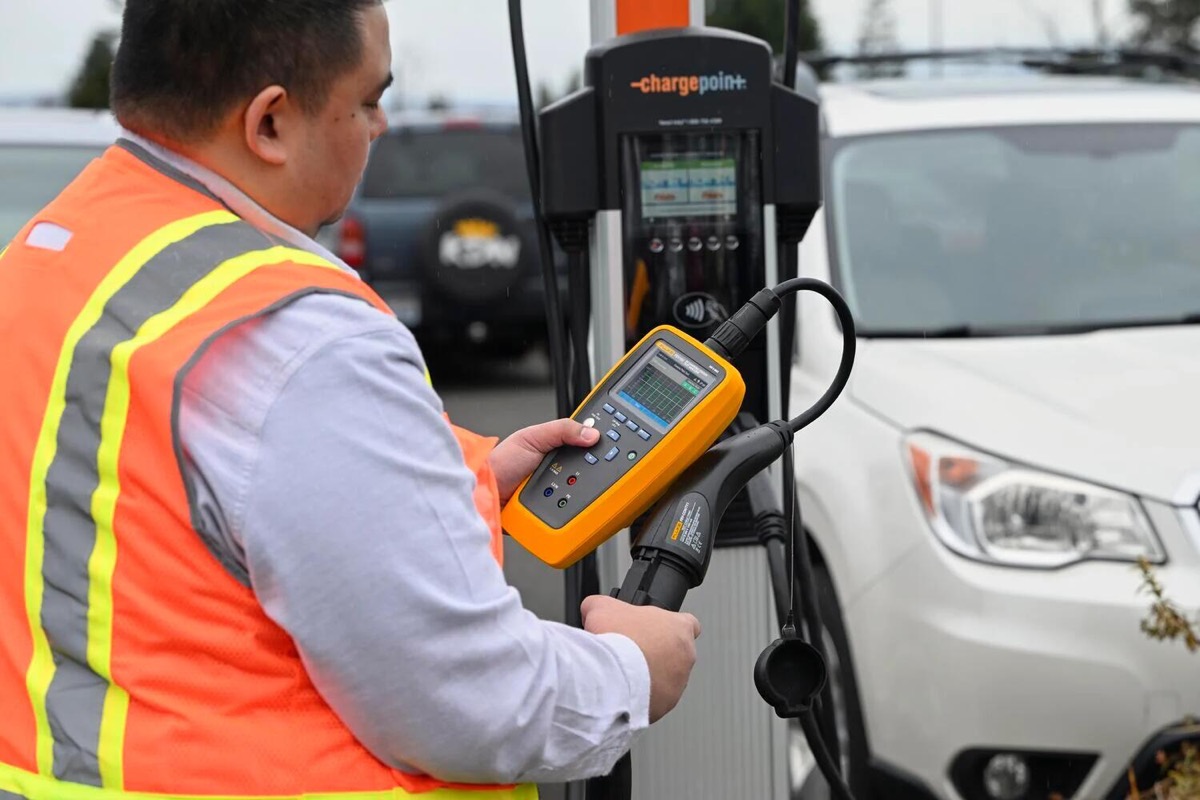
This is exactly what an EVSE tester is for. It impersonates a vehicle convincingly enough that the charger runs its normal negotiation and delivers, and the instrument measures what comes out instead of a battery absorbing it.
Picking the tool that matches the charger
| Model | For | What it gives you |
|---|---|---|
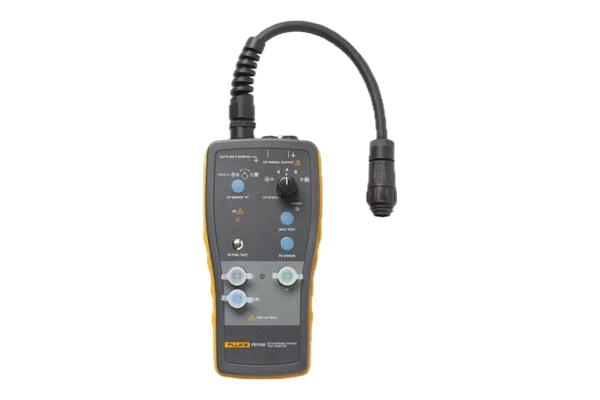
| FEV100 | Level 1 and 2 AC | A vehicle-simulating adapter used with a multimeter or scope you already own — CP states A through D, protective-earth pre-test, GFCI trip verification |
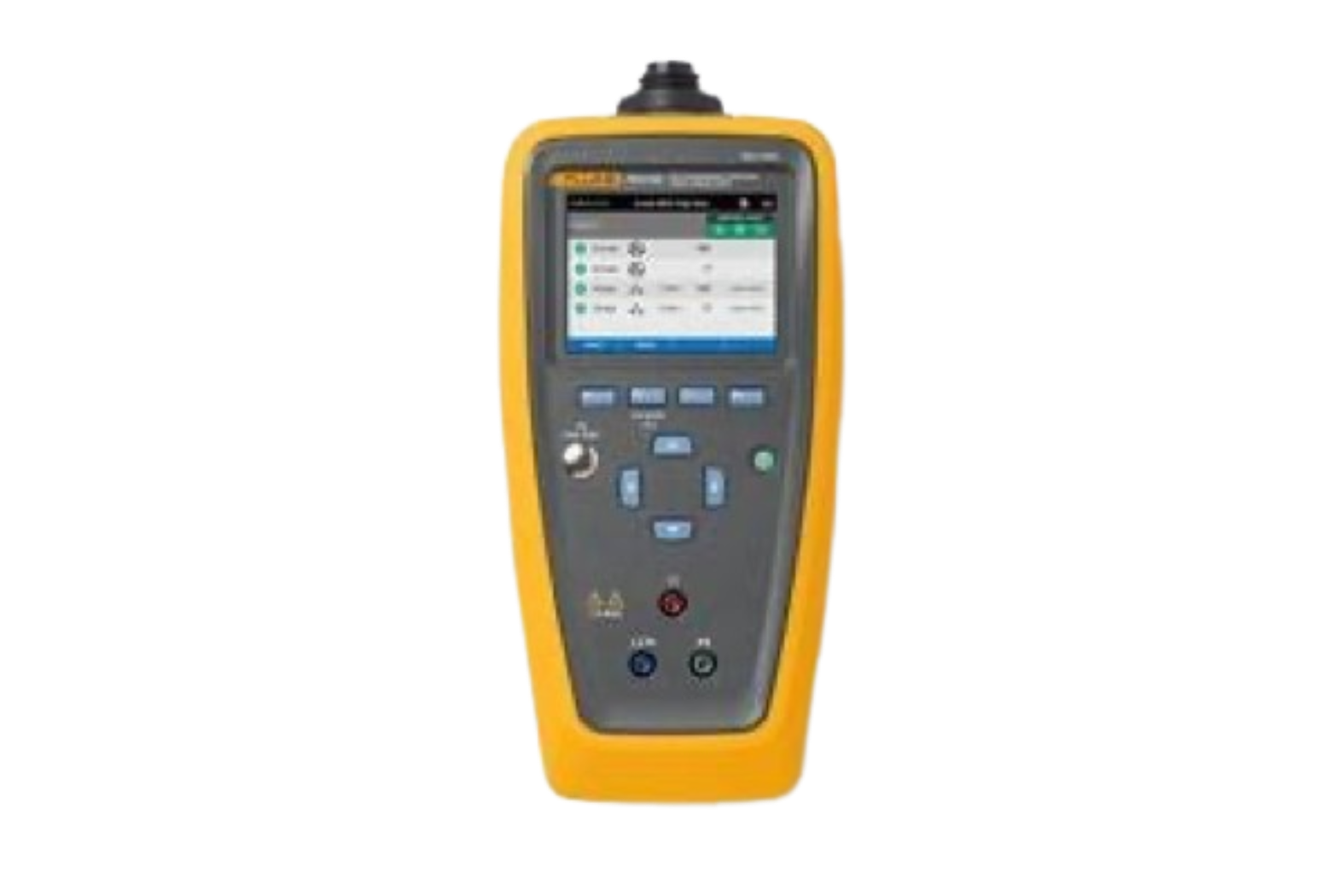
| FEV150 | AC chargers | Folds the safety and performance tests into one instrument, no separate meter to carry, with test records stored on the device |
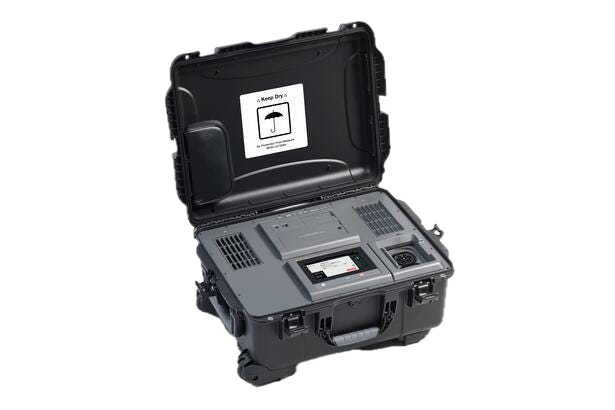
| FEV500 | DC fast chargers | Simulates a vehicle over CCS at up to 2.4 kW of real charging, with a multimeter, insulation tester, and oscilloscope in one case, and a one-button Autotest that returns pass or fail |
Check the connector before you order
Most AC chargers in Thailand use the Type 2 connector, while a number of North American tools ship with Type 1 (SAE J1772) or Tesla connectors. Confirm the variant you are ordering matches what is actually installed on site. On the DC side, CCS2 is the Thai standard.
Who this is for, and in which service jobs
These tools are not for every electrician — they are for whoever is accountable for whether a given charger actually works. That covers several groups, and each of them reaches for the instrument at a different moment.
| Who | When they use it | Model that fits |
|---|---|---|
| Electrical contractors and charger installers | Commissioning a finished installation before handover — confirming earth, insulation, and residual-current tripping all check out | FEV100 or FEV150 for AC, FEV500 for DC |
| Charge point operators | Scheduled maintenance rounds, and call-outs when a unit stops delivering — with contracted uptime to protect | FEV500, with automatic result capture |
| EV fleet operators — buses, delivery vehicles | Checking depot chargers before the shift, because the whole fleet has to roll out at the same time | FEV150 for AC, FEV500 for fast chargers |
| Facility teams — malls, hotels, plants | Looking after chargers installed for customers or staff — periodic checks, and one before the warranty runs out | FEV100 alongside a multimeter you already own |
| Charger makers, importers, and distributors | Outgoing quality checks before shipment, and incoming inspection against the published rating | FEV500 |
| Third-party inspectors and safety auditors | Issuing reports for someone else to rely on, which needs measurement evidence tied to a standard | FEV500 with TruTest software |
Seen as service work, these tools slot into five moments: commissioning before handover, scheduled maintenance, fault-finding when a unit is down, a pre-warranty-expiry check while a claim is still possible, and a re-test after repair to prove the job actually closed. The first three are recurring revenue for a contractor or operator; the last two are what brings the customer back.
What else belongs in the bag
An EVSE tester answers the negotiation and delivery questions, but plenty of work at the cabinet still needs ordinary instruments.
- A True-RMS multimeter such as the Fluke 87V for working through voltages and currents inside the cabinet, its CAT III 1000 V and CAT IV 600 V rating covering the supply side
- An insulation tester such as the Fluke 1587 FC to check the charging cable and enclosure at up to 1000 V, then measure on with the multimeter built into the same body
- A thermal imager such as the Ti401 PRO or TiS20+ to find connections running hot while the unit is delivering — a loose termination shows up as a hot spot long before it burns
- An electrical tester such as the T6-1000 PRO, which reads voltage without a test lead touching the conductor — fewer covers off and less live contact on routine checks
A test you cannot show is a test you did not do
Charger inspection usually sits under a maintenance contract or a warranty, and a measurement with no record behind it counts for nothing when a dispute arrives. Newer instruments like the FEV500 capture results automatically and export reports through TruTest software, which also leaves the team a history to compare against as individual units degrade.
Putting it to work
If the work is mostly AC, an FEV100 alongside the multimeter you already own is enough to start; move to the FEV150 when carrying less matters. Take on DC fast chargers and the FEV500 is the one that answers the brief — three instruments in one case, and no vehicle required. The rest is kit most electricians already carry.