The classic automation question is: “servo or stepper for this job?” Both work well in their lane, but the wrong choice means overpaying — or falling short and having to swap it out. This guide helps you decide in five minutes.
The difference, in short
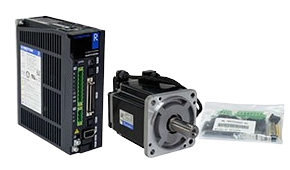
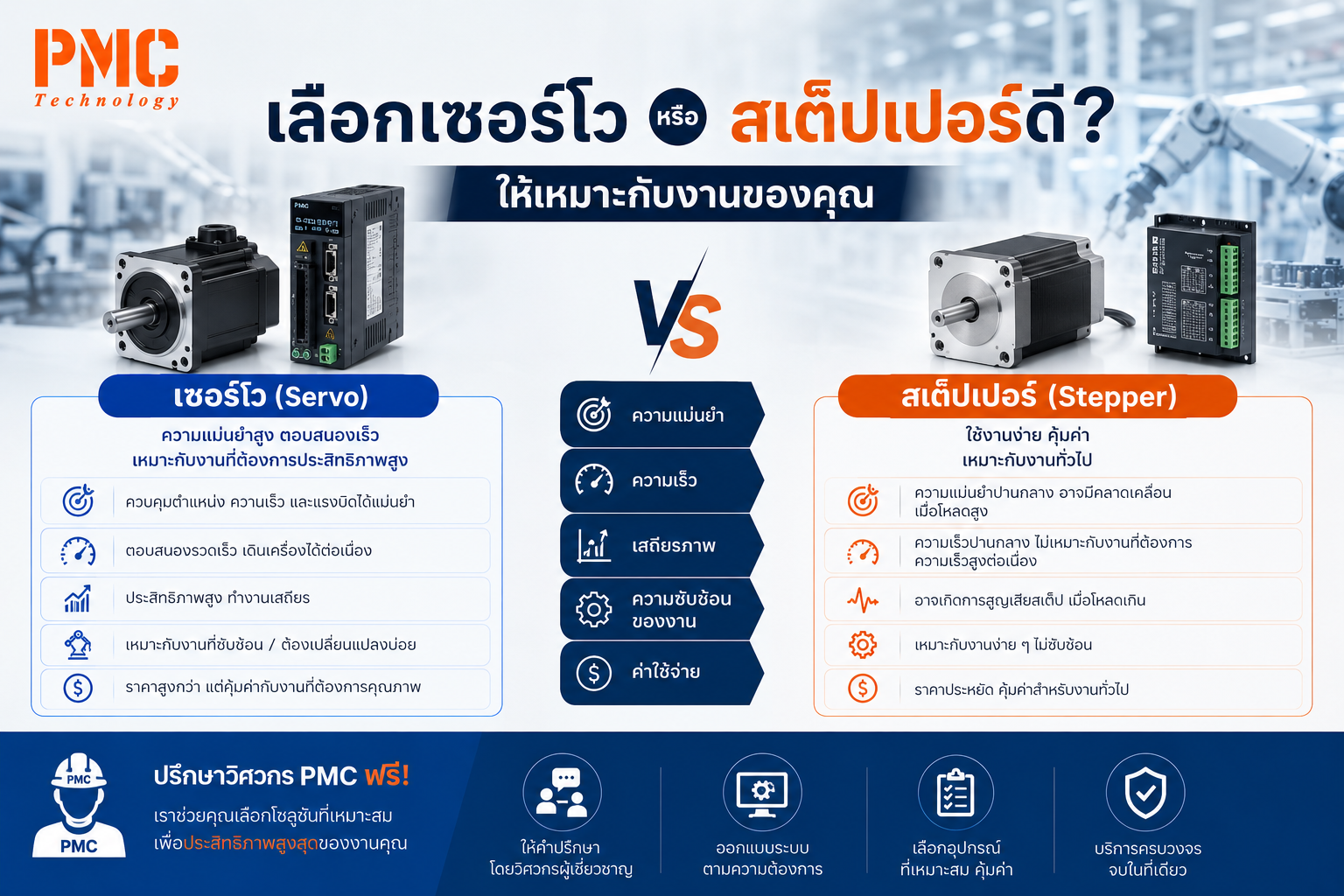
A stepper moves in fixed “steps” open-loop, with no feedback — simple and cost-effective. A servo has encoder feedback (closed-loop) constantly correcting its position, so it is faster, stronger, and more accurate under load or at high speed.
| Factor | Stepper | Servo |
|---|---|---|
| Control | Open-loop (no feedback) | Closed-loop (encoder feedback) |
| Speed | Low to medium | High |
| Torque at high speed | Drops off at speed | Sustained across a wide range |
| Risk of lost steps | Yes, if overloaded | No (self-correcting) |
| Cost | Lower | Higher |
| Setup complexity | Simple | Needs tuning |
Choose a stepper when…
- Low-to-medium speed with a steady, predictable load.
- You want simple positioning without tuning.
- Budget is tight and simplicity matters.
- Examples: dispensers/feeders, slow XY axes, 3D printers.
Choose a servo when…
- You need high speed, frequent accel/decel, and a fast duty cycle.
- The load varies, or losing position is unacceptable.
- You need accuracy and sustained high torque.
- Examples: pick-and-place robots, high-speed lines, CNC machines.
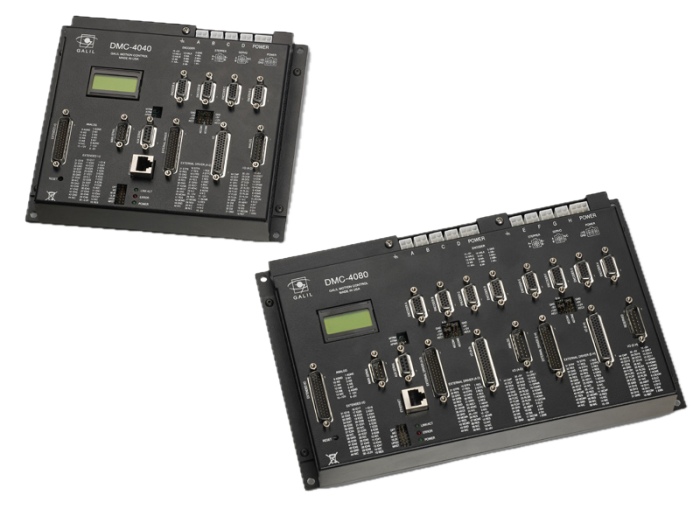
In many real machines the answer is “both” — steppers on the slow, simple axes and servos where performance matters, all driven by one controller (like Galil, which mixes servo and stepper). That controls cost without sacrificing performance.
Still unsure? Let us pick for you, free
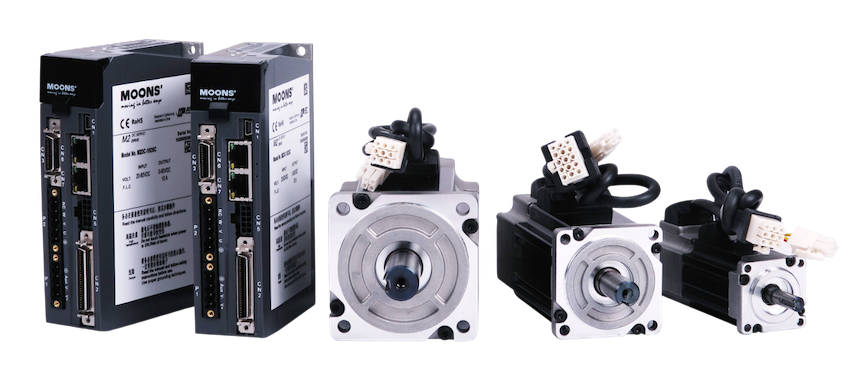
The best choice depends on your real numbers — load, speed, duty cycle, and required accuracy. The PMC Technology engineering team can size it and recommend the right servo/stepper (e.g. SANMOTION, MOONS’) plus a matching controller for your job and budget. Send us your details — no charge.