When PM2.5 levels spike, many households shut every door and window tight — yet indoor dust stays high. That is because ordinary homes are never perfectly sealed, so dust keeps leaking in through small gaps. The solution hospitals and cleanrooms have used for years is a positive-pressure system, and today it can be applied to a home with the right fan and filter.
Why dust gets in even with the windows closed
A typical home has more leaks than you would expect. When indoor air is pulled out — by bathroom exhaust fans, kitchen hoods, or even leaky AC ducts — the pressure inside drops slightly below the outside. Dust-laden outdoor air is then automatically drawn in through those gaps to make up the difference, a process called infiltration.
- Gaps around door and window frames.
- Penetrations for AC pipes, plumbing, and wiring through walls.
- Electrical outlets and switches on exterior walls.
- Bathroom and kitchen exhaust fans.
- Undercuts beneath doors and ceiling voids.
How a positive-pressure system works
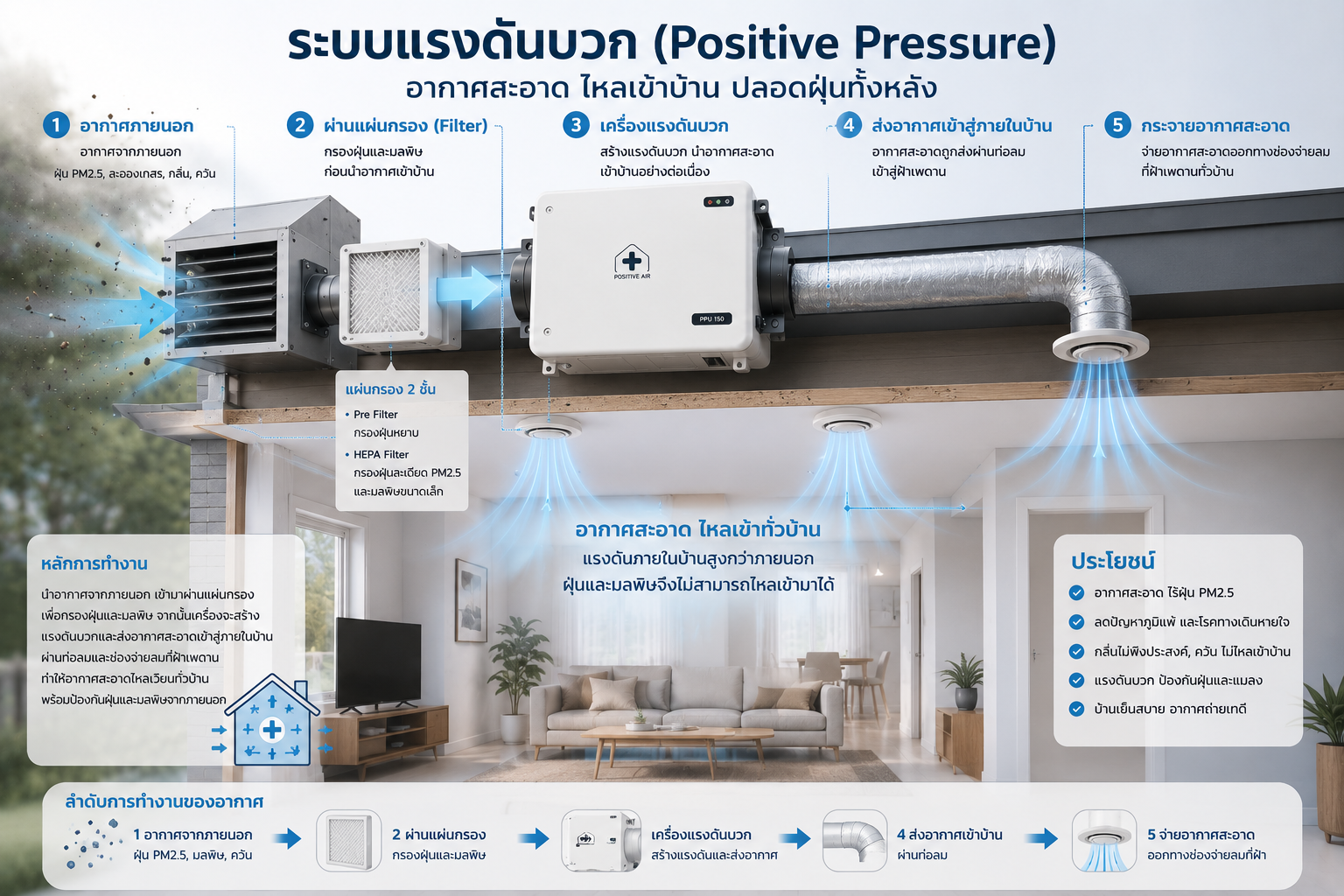
The idea is simple: push more clean, filtered air into the house than leaks out, so the indoor pressure sits slightly above the outdoor pressure (overpressure). Air then flows outward through every gap instead of inward — and outdoor dust cannot push its way back in. The home is, in effect, always gently exhaling filtered air.
- A fan — to push outdoor air into the house.
- A dust/PM2.5 filter — typically a pre-filter plus a HEPA element (grade F7–H13).
- A reasonably sealed house — to hold the positive pressure.
The required overpressure is tiny — roughly 5–15 pascals (Pa) is enough to keep dust out. The challenge is that HEPA filters have high airflow resistance, so the fan must provide enough static pressure to push air through the filter without its airflow collapsing. This is where fan selection matters most.
Building the system with San Ace fans
A home positive-pressure system is made of a fan, a filter box, and ducting or supply grilles. It draws outdoor air, passes it through the filter stack, and pushes it into a central space (such as a hallway or living room), letting the clean air spread and exit through the building’s gaps.
- A high-static-pressure San Ace fan — the heart of the system.
- A PM2.5 filter stack — a pre-filter for coarse dust plus a HEPA element for fine particles.
- Ducting and supply grilles into the living spaces.
- (Optional) a pressure or dust sensor to adjust fan speed automatically.
Why high static pressure — and why San Ace fits
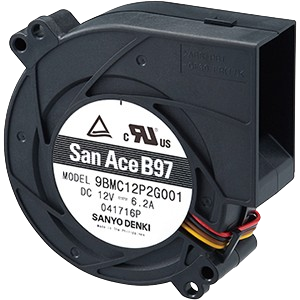
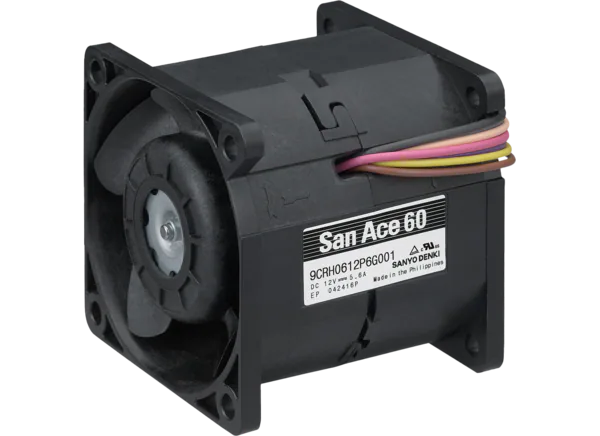
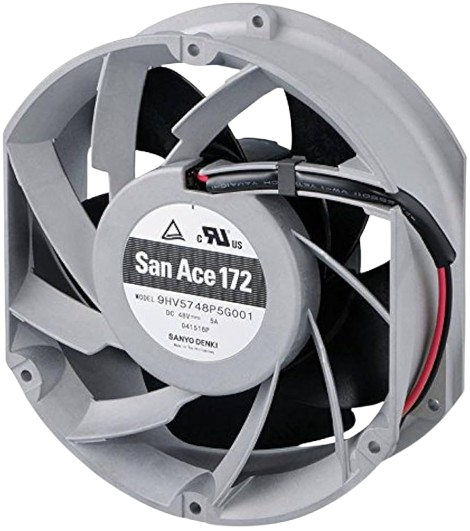
An ordinary axial fan loses airflow quickly when forced through a high-resistance filter. San Ace offers high-static-pressure and centrifugal blower models built to push air through that resistance without collapsing, plus low-noise versions for living spaces, long-life models rated to around 150,000 hours (years of 24/7 running with almost no maintenance), and PWM speed control to set the pressure level and save energy.
- High static pressure / blower models — genuinely push through HEPA.
- Low-noise versions — suited to living rooms and bedrooms.
- PWM speed control — tune the overpressure and save energy.
- Long life around 150,000 hours — years of continuous use.
Cooling the home at the same time
The same system can also make the home cooler and more comfortable by moving air — exhausting the hot, stale air that builds up and replacing it with filtered air. That reduces both heat buildup and humidity, so the air conditioner works less and uses less power.
- Vent accumulated heat from the roof space and hot rooms to lighten the AC load.
- Bring in cool air at night or early morning (night purge) when it is cooler outside, to lower the building’s temperature.
- Pair with an evaporative pad or heat-recovery unit to pre-cool the incoming air.
- Direct airflow across occupied areas — moving air feels cooler even at the same temperature.
The trick is balance — vent enough heat to cool the home while still holding the positive pressure that keeps dust out. San Ace’s PWM-controllable fans let you tune that balance and ramp up when dust or heat is especially high.
Benefits of a positive-pressure home
- Markedly lower indoor dust and PM2.5.
- Fresh, well-ventilated air instead of stuffiness.
- Less odor, humidity, and mold risk.
- A lighter AC load and lower electricity bills.
- Better for the household’s respiratory health.
Which San Ace fan to choose
- Pushing through a HEPA filter → choose a high-static-pressure or blower model.
- For living spaces → choose a low-noise model.
- To tune pressure and save energy → choose a PWM speed-control model.
- For round-the-clock use → choose a long-life model (~150,000 h).
- Size the frame to the required airflow (homes often use roughly 120–172 mm).
A dust-free, comfortably cool home starts with the right fan. As the San Ace distributor in Thailand, the PMC Technology team can help size the airflow and pressure for your home and recommend the right model.