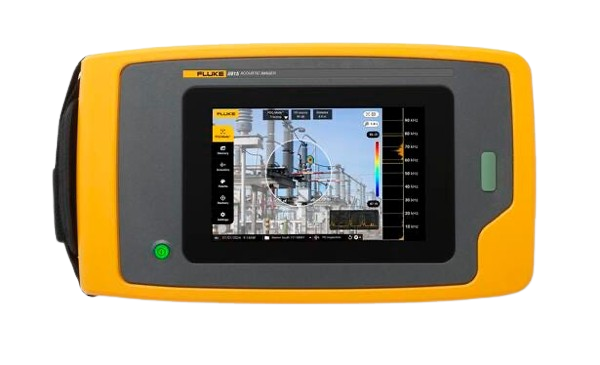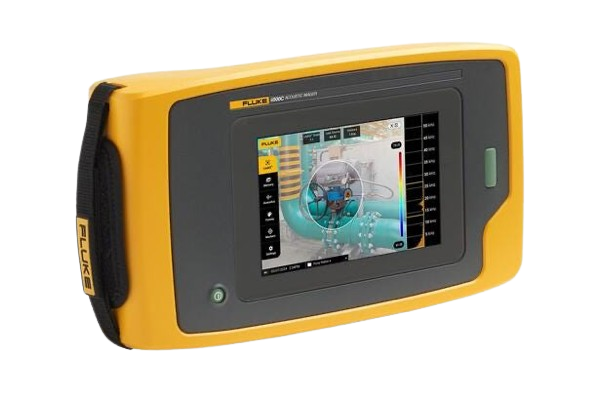
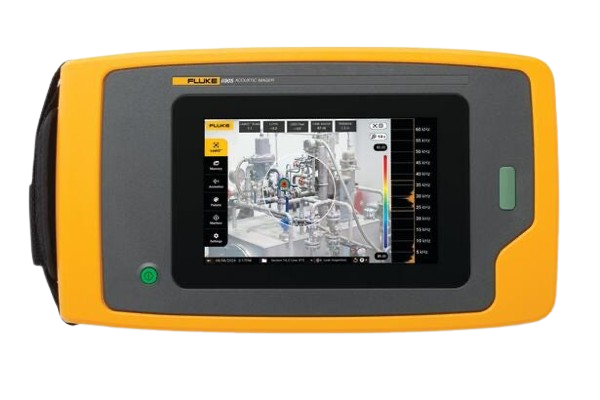
The compressor runs all day, the electricity bill creeps up every month, and when someone asks where it is leaking, nobody can point. Compressed air leaks leave nothing to see — no stain, no drip — and the sound they make disappears into the noise of the machines around them. Most plants have been paying for leaked air for years without ever knowing.
Why leaked air costs more than it looks
Compressed air is not free air — it is electricity that has been converted, and converted inefficiently. Only a fraction of what goes into the compressor becomes useful work at the tool; the rest leaves as heat. Every litre escaping a fitting is therefore electricity bought and thrown away. Energy-efficiency literature commonly puts leakage in a typical plant at 20 to 30 percent of compressor output.
The knock-on effects are worse. As leaks drag system pressure down, the compressor cycles more often and runs longer to hold it up, which shortens its life and raises maintenance cost. Some plants add a second compressor believing they have run out of capacity, when capacity was never the problem — the air was leaving before it arrived.
The old methods, and where they run out
- Soapy water — accurate, but you must reach the pipe and you can only do one joint at a time. Runs on a high ceiling or behind a machine are effectively out of reach.
- A handheld ultrasonic detector — better, but you still have to get close and sweep point by point, and it takes experience to tell a real leak from a reflection.
- Shutting the line down and listening while the plant is quiet — it works, but it costs production time, and plenty of plants simply cannot stop.
How an acoustic imager works
Air forcing through a small hole goes turbulent, and turbulence radiates sound well above the range human ears pick up. The useful part is that ordinary plant machinery lives at much lower frequencies, so a leak stands out in ultrasound even in a plant where people can barely hear each other talk.
The imager carries dozens of microphones in an array. Each hears the same sound a fraction of a moment apart, and the instrument works backwards from those differences to the direction it came from, then paints it as a colour map over the ordinary camera picture. The technician sees the leak as a coloured spot on screen and can sweep a pipe run from the floor — no ladder, no shutdown, no guessing where the hiss is coming from.
A loud plant is not a problem — the two live in different bands
The first question from anyone who works in a plant is always the same: with compressors, motors, fans, and conveyors roaring away, how is the camera supposed to pick out one small leak? The answer is that the two sounds were never in the same frequency band to begin with.
| Frequency band | What lives there |
|---|---|
| Below roughly 5 kHz | Where most machinery energy sits — motors, fans, pumps, conveyors, and people talking |
| Up to about 20 kHz | The upper edge of what human ears still register |
| Roughly 20–100 kHz | Ultrasound from leaks, from partial discharge, and from rotating parts starting to go wrong — above hearing entirely |
So the imager simply listens above the audible range — set it to accept only 25 to 52 kHz, say, and the compressor that has everyone shouting falls outside the window and never reaches the image at all. If something on site still intrudes, the band can be narrowed or shifted higher. The filtering happens inside the instrument; nothing has to be done about the noise source itself.
A second layer helps as well. The microphone array does not just report that a sound exists, it reports which direction it came from. Even where a plant genuinely has other ultrasound sources — a blow-off nozzle left open, for instance — each one lights up at its own position instead of smearing across the leak you are looking for. The separation happens twice over: once by frequency, once by location.
The practical consequence is what changes how the work is done. No waiting for a shutdown, no night shift when the plant is quiet, no switching off nearby equipment first. The survey happens with the line running at full tilt — which is precisely when the system is fully pressurised and the leaks are showing themselves most clearly.
Matching the model to the job
| Model | Frequency / range | Best for |
|---|---|---|
| ii500 | 2–52 kHz / to 50 m | Getting started on leaks — usable with next to no training, for a maintenance team running its first leak survey |
| ii905 | 2–65 kHz / to 70 m | Adds LeakQ — a 1-to-10 size rating plus leak rate and cost, for plants that need numbers to take upstairs |
| ii915 | 2–100 kHz / beyond 120 m | All three modes — LeakQ for leaks, PDQ for partial discharge on insulators and switchgear, MecQ for faults in rotating equipment |
LeakQ turns repairs into a number
Finding thirty leaks in a day is not unusual, and the repair team has limited hours — so the real question is which ones first. LeakQ answers it by sizing each leak and converting that into a leak rate and a cost, which sorts the list by money on the spot. When the repair budget goes up for approval, that same figure is the argument management already understands.
One walk, more than leaks
Leaks are not the only thing that radiates ultrasound. Partial discharge tracking across insulation in high-voltage switchgear sits in the same band, and a bearing starting to run dry or wear changes its sound before the vibration becomes obvious. The ii915 folds in PDQ and MecQ for exactly that reason: one walk covers air, electrical, and mechanical, instead of three walks with three instruments.
Running a survey that actually pays
- Sweep while the plant is running at normal load, not during a shutdown — a leak only shows itself when the system is pressurised.
- Tag every find with an image and its estimate. Do not rely on memory — coming back later, the same spot is surprisingly hard to relocate.
- Rank repairs by cost, not by convenience. A big leak on the ceiling beats a small one within arm’s reach.
- Re-scan after the repair to confirm it actually closed, and keep the before-and-after as evidence of what the spend returned.
- Make it a recurring round rather than a one-off. New leaks keep appearing as vibration and age work on the fittings.
Limits worth knowing first
- The imager needs line of sight — a leak behind a panel or inside a closed enclosure will not be seen.
- Ultrasound reflects off hard surfaces, so a spot on screen is sometimes an echo. Move and look again to confirm.
- Equipment that vents by design — blow-off nozzles, relief valves — lights up like a leak. Telling them apart takes knowing the plant.
- The quoted maximum range assumes favourable conditions; a site with high-frequency noise of its own will get less.
If a plant has never run a proper leak survey, the first one usually pays back hardest — years of accumulated leaks are sitting there waiting. The PMC team can help match a model to the size of the plant and the budget.